

Heating. Cooling. Comfort.

Residential AC and heating for Central Florida homes. Repair, replacement, maintenance and indoor air, handled by a team that treats the machine outside your house like precision equipment.

Scroll Cooling & Heating Orlando, FL

Comfort is a machine you never think about.

Your AC does not make cold. It moves heat. Refrigerant pulls warmth out of your home, carries it to the condenser outside, and the fan throws it into the yard. When that loop runs clean, the house stays quiet and cool. When one part slips, the whole loop works harder.

That is the job we do. We read the system as a whole, find the part that is costing you comfort, and put it right. Cooling for the long Florida summers. Heat for the cold snaps. Cleaner air all year.

AbsorbIndoor coil pulls heat from the air in your home.
CarryRefrigerant moves that heat outside.
CompressThe compressor raises its pressure and temperature.
ReleaseThe condenser coil and fan reject it outdoors.

The assembly sequence could not load. Everything else on the page works normally.

Precision in every component.

Scroll to put an outdoor condenser together, piece by piece.

  1. 01Coil, compressor & controls
  2. 02Louvered panels
  3. 03Fan & motor
  4. 04Top cover
  5. 05Fan guard
00Exploded view

Illustrative visualization. Not a specific manufacturer's unit.

Modern Central Florida home at dusk with its outdoor air conditioning unit on a concrete pad

Our climate asks more of your system.

Long, hot seasons and heavy humidity mean a Central Florida air conditioner runs harder and longer than most in the country. It has to cool the air and pull water out of it at the same time. That is why sizing, maintenance and drainage matter so much here.

10–15 yearsTypical life of an AC system in Florida's heat and humidity.
30–50% humidityThe indoor range the EPA recommends. Stay below 60%.
14.3 SEER2Minimum efficiency for most new home split systems in the Southeast, including Florida, since 2023.
June to NovemberAtlantic hurricane season. Outdoor units must be anchored against wind.

Sources: U.S. EPA indoor humidity guidance; U.S. DOE regional efficiency standards (Jan. 1, 2023); Florida Building Commission.

Climate Control & Air Distribution

Your thermostat controls when your heating or cooling system activates, while the blower and ductwork work together to deliver conditioned air throughout your home, helping maintain consistent comfort in every room.

Thermostat Interactive demo

Cutaway of a Central Florida home showing the air handler in the hall closet, the supply duct trunk in the attic, a ceiling vent in every room, the return-air grille and the thermostat
  1. The thermostat calls for the system, the blower in the air handler starts, and conditioned air travels through the attic supply ducts to a ceiling vent in every room while room air returns through the hallway grille.
  2. As you scroll, the demo temperature rises one degree at a time from 65 to 85 degrees Fahrenheit. 65 to 74 degrees runs cooling with blue air. 75 to 85 degrees runs heating with amber, orange and warm red air. Scrolling back reverses it.
  3. This is a demonstration. It is not connected to any home or HVAC system.

What is working outside, and inside.

Most Central Florida homes run a split system: an outdoor condenser connected to an indoor air handler by a pair of copper lines. Here is what each part does, and what we look at when something goes wrong.

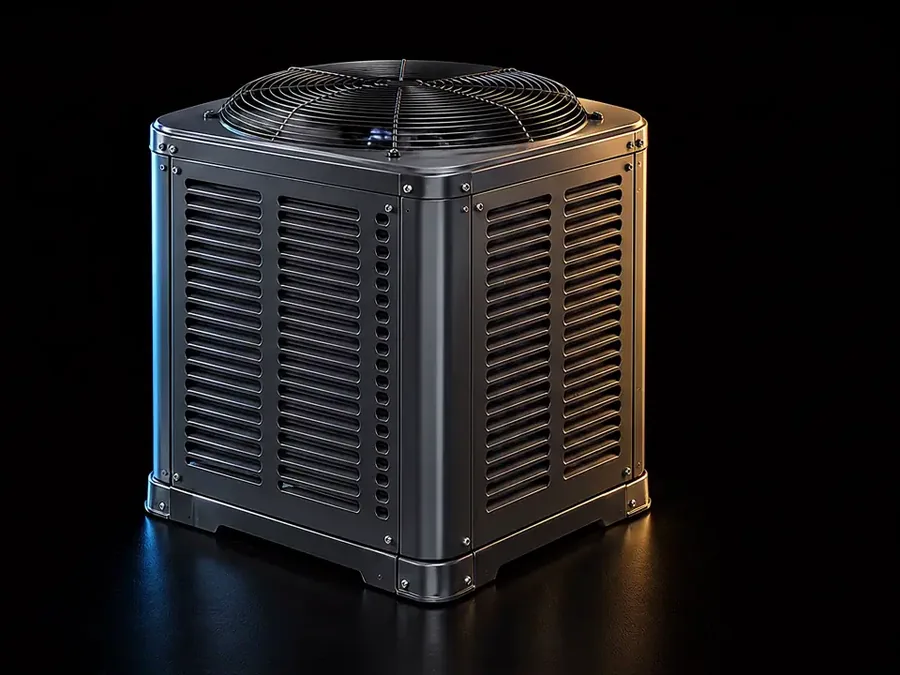
Outdoor condenser unit with fan guard and coil
Outside

The outdoor unit

Releases the heat your system pulls out of the house.

  • CondenserThe coil and fan that throw your indoor heat into the yard.
  • CompressorThe heart of the system. It pressurizes refrigerant and keeps it moving through the loop.
  • Capacitor & contactorSmall electrical parts that start the compressor and fan. A failing capacitor is a frequent cause of a unit that hums but will not start.
  • Refrigerant linesInsulated copper tubing that links the outdoor unit to the air handler.
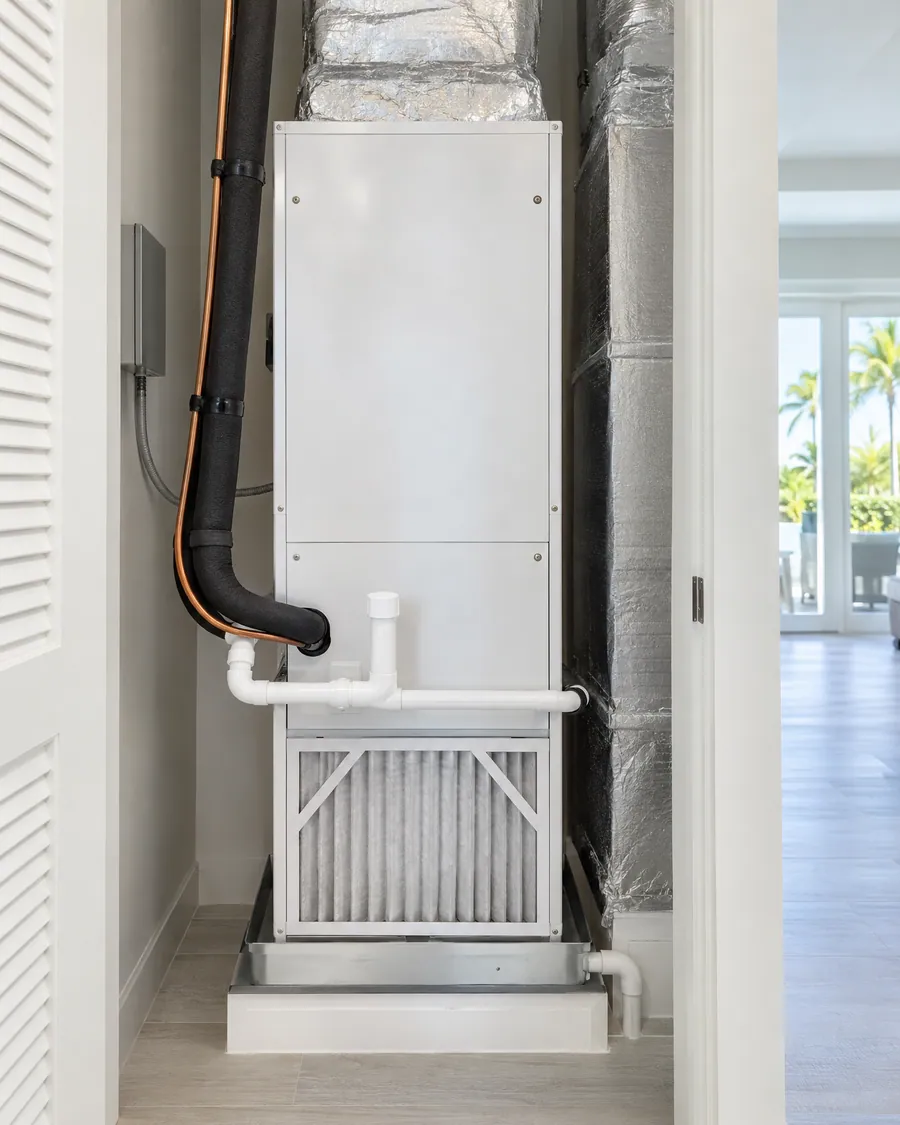
Indoor air handler in a utility closet with insulated copper lines, condensate drain and filter
Inside

The air handler

Pulls heat and moisture out of your indoor air.

  • Evaporator coil & blowerThe cold coil and fan that cool and dry the air moving through your home.
  • Condensate drainCarries away the water your system wrings out of the air. In Florida humidity it runs constantly, and algae can clog it.
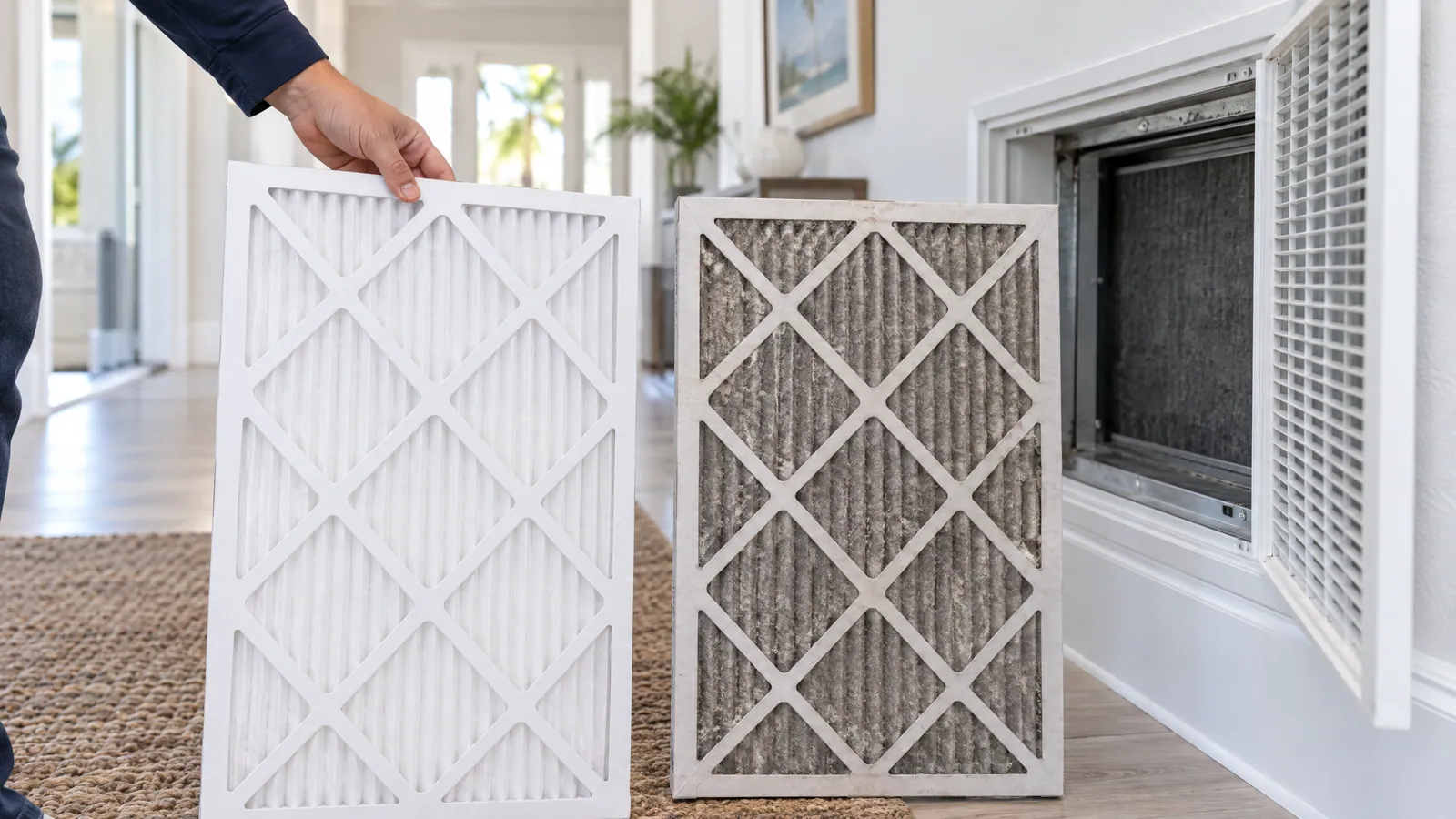
  • Air filterCatches dust before it reaches the coil. A dirty filter chokes airflow, comfort and efficiency.
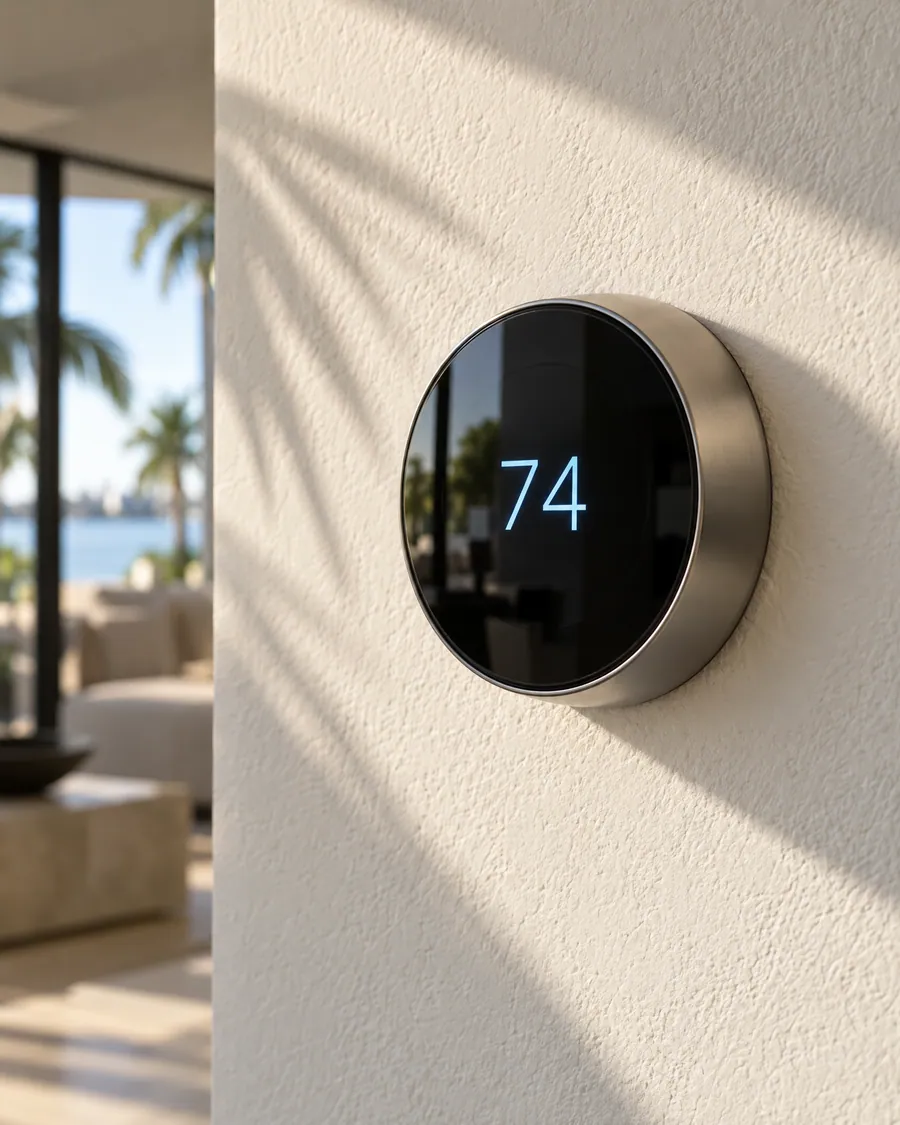
Modern thermostat on a textured wall showing 74 degrees
Inside

Controls & airflow

Decides when the system runs and gets the air to every room.

  • ThermostatTells the whole system when to run, and for how long.
  • DuctworkDelivers conditioned air to every room. Leaks in a hot attic waste cooling you already paid for.
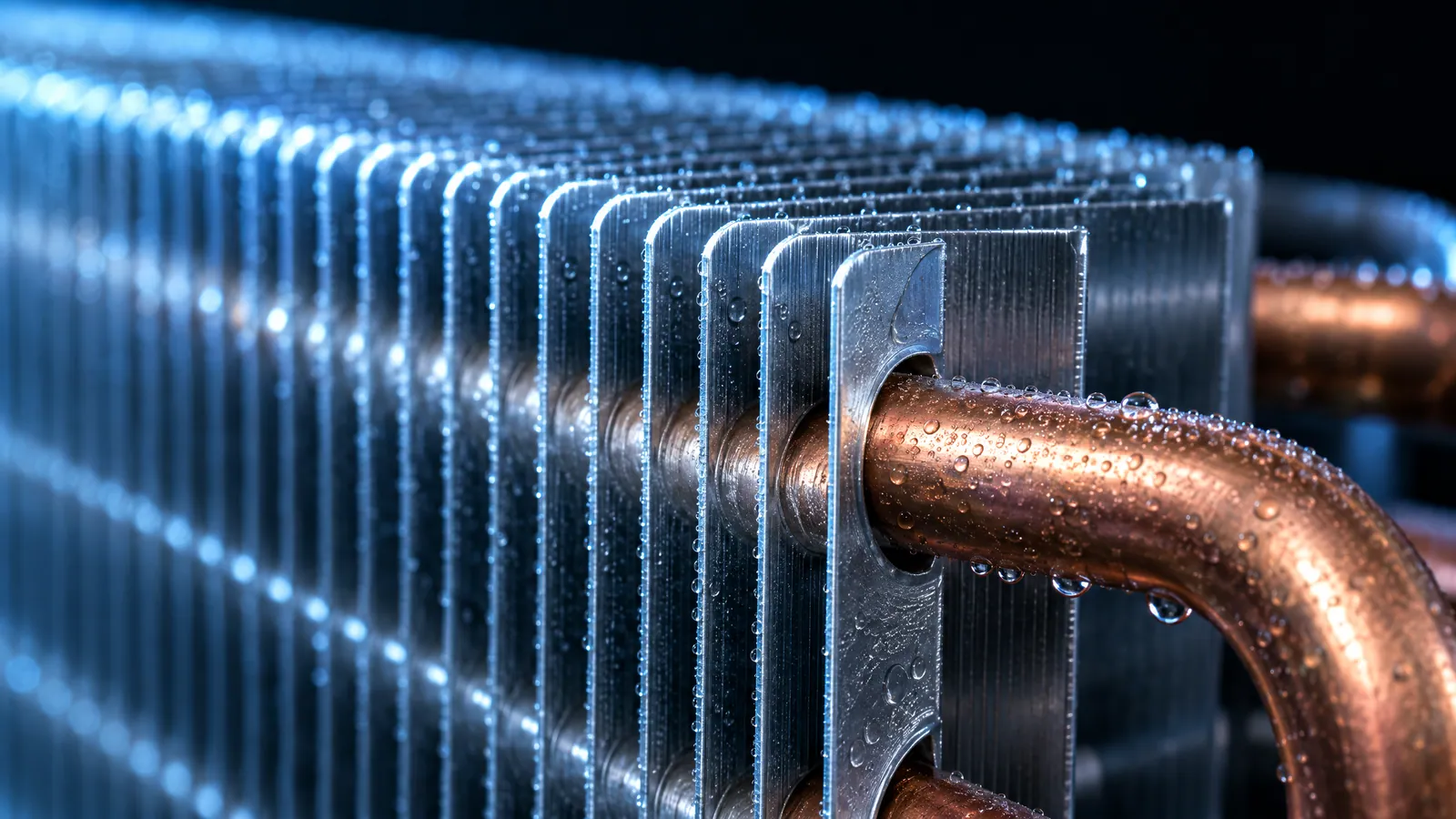
Macro view of condenser coil fins and copper tubing beaded with condensation

When to call us.

Small symptoms usually show up before a breakdown. Catching them early is the difference between a repair and a replacement.

  • Warm or weak air from the vents
  • Runs nonstop, or cycles on and off every few minutes
  • Ice on the copper lines or indoor coil
  • Water around the air handler
  • The house feels sticky even when it is cool
  • Grinding, banging, buzzing or hissing
  • Power bills climbing with no change in use
  • A musty smell when the system kicks on

What we do.

Four lines of work, one standard. Every visit starts with a clear explanation and ends with a system you can count on.

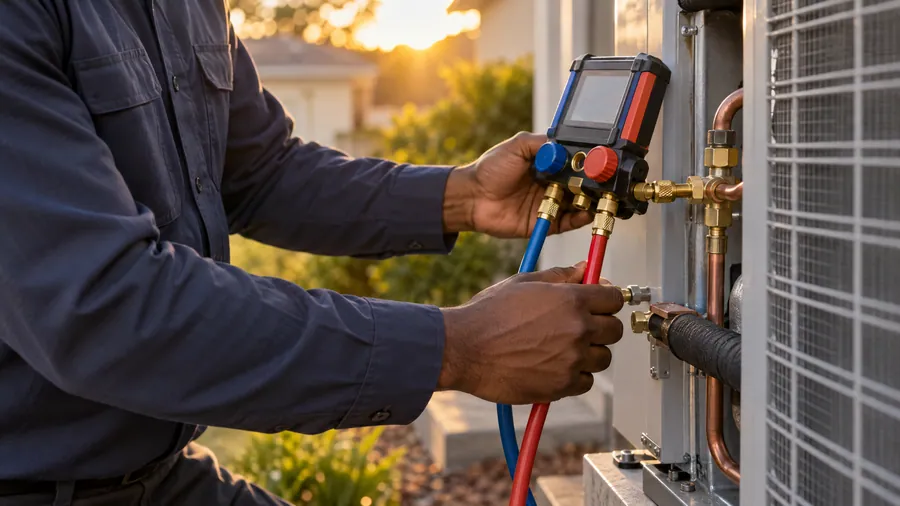
Technician connecting refrigerant gauges to an outdoor condenser
Cooling

AC repair & emergency service

When the system quits, call us. We find the failure, explain what broke and what it takes to fix, and get cool air moving through the house again.

Request repair
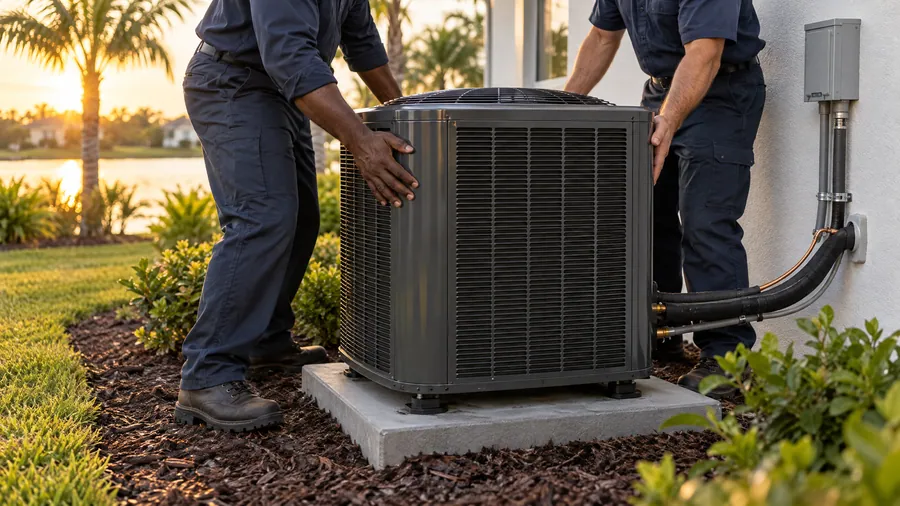
New outdoor condenser being set on a concrete pad beside a Florida home
Systems

Installation & replacement

When repair stops making sense, we plan and install the replacement. You get a clear picture of the options before any work starts.

Request replacement
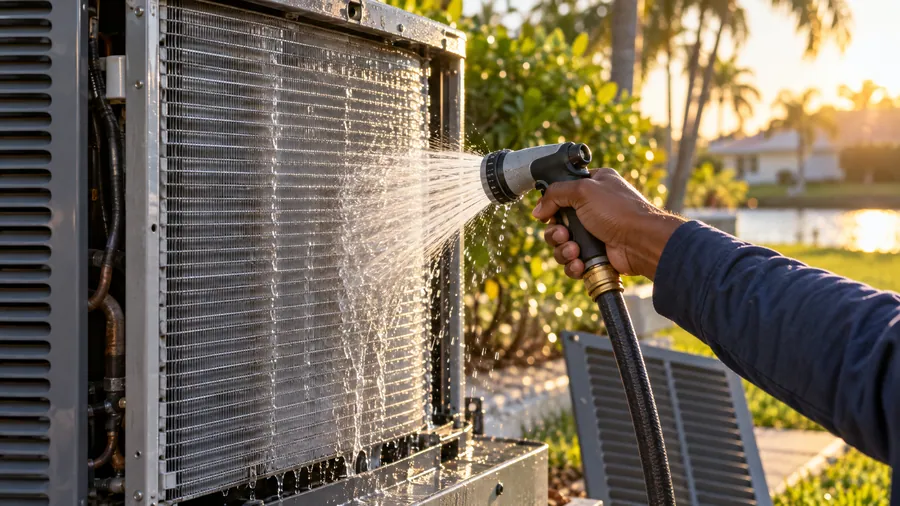
Condenser coil being gently rinsed during maintenance
Care

Maintenance plans

Scheduled visits that keep the coil clean, the drain clear and the electrical parts checked, so small problems get caught before they become breakdowns.

Ask about plans
Warm, quiet Florida bedroom on a cold night
Heat + Air

Heating & indoor air quality

Heating service for the cold nights, and indoor air quality work for the air your family breathes every day.

Request heat & air service
Scroll

Keep it running between visits.

Simple habits that protect your system

  1. Check the filter monthly. Replace it on the schedule its maker recommends, sooner with pets or dust.
  2. Keep plants, mulch and grass clippings clear of the outdoor unit so it can breathe.
  3. Leave supply vents and return grilles open and unblocked.
  4. Watch the condensate drain. Water near the air handler means it is time to call.
  5. Book professional maintenance before summer, and again before winter if you heat with a heat pump.

Hurricane season checklist, June 1 to November 30

  1. Florida's building code calls for outdoor units to be fastened down so wind cannot tip or slide them. We can check your tie-downs.
  2. Clear loose items, furniture and debris from around the unit before a storm.
  3. As a storm approaches, set the thermostat to off and switch off the outdoor disconnect.
  4. If the unit took on floodwater, do not restart it until it has been inspected.
  5. After the storm, look for bent fins, debris in the fan guard or damaged copper lines.
A clean new air filter held beside a dust-clogged one in front of a return grille

Cool is half the job. Dry is the other half.

A house at 74 degrees can still feel clammy if humidity is high. A correctly sized system runs long enough to pull moisture out as it cools. Clean coils, a clear drain and a fresh filter keep it doing that, which is what makes a Florida home feel genuinely comfortable.

Central Florida AC, answered.

Straight answers to what homeowners ask us most.

Most systems here last about 10 to 15 years. Heat, humidity and near year-round runtime wear equipment faster than in milder climates. Regular maintenance is how you get to the top of that range.

The EPA recommends keeping indoor humidity below 60 percent, and ideally between 30 and 50 percent, to limit mold growth. A correctly sized, well-maintained system removes moisture as it cools.

SEER2 measures seasonal cooling efficiency. Higher numbers use less electricity for the same comfort. Since January 1, 2023, new split air conditioners installed in the Southeast, including Florida, must meet at least 14.3 SEER2 under 45,000 Btu/h, or 13.8 SEER2 for larger systems. Split heat pumps must meet 14.3 SEER2.

No. An oversized system cools the air quickly and shuts off before it removes enough humidity, leaving the house cool but clammy, and it cycles on and off more often. Correct sizing starts with a load calculation for your specific home.

A heat pump moves heat into your home instead of creating it, so it heats efficiently through mild Central Florida winters and handles cooling too. Electric heat strips in the air handler are a common backup for the coldest nights.

R-22 is no longer produced in the United States, so recharging an older system keeps getting more expensive. If an R-22 system develops a leak, pricing a replacement usually makes sense. New systems use newer, lower-impact refrigerants.

At least once a year. Many Florida homeowners schedule twice: in spring before peak cooling, and in fall before heating season.

The most common cause is a clogged condensate drain line. Turn the system off and call us. Standing water can damage ceilings, floors and drywall quickly.

Request service.

A few quick questions, then we take it from there. It takes about two minutes.

  • Only the questions that matter for your request.
  • Review everything before you send it.
  • Need help right now? Call (407) 501-5857.
How can we help?Step 1 of 6

How can we help?

Tell us what you need help with. We'll guide you through the next steps.

Service

Tell us about your request

A few details help us come prepared.

Your contact information

So we can reach you about this request.

We'll call or text this number.
Street, city and ZIP of the home we'll be working on.
Gate code, pets, best entrance, parking.

Choose your preferred appointment

Times are Eastern Time (Orlando).

Review your information

Talk to a real team.

(407) 501-5857
Phone(407) 501-5857Call Now
Emailinfo@vantaairhvac.comEmail Us
OnlineTell us what you need in about two minutes.Request Service